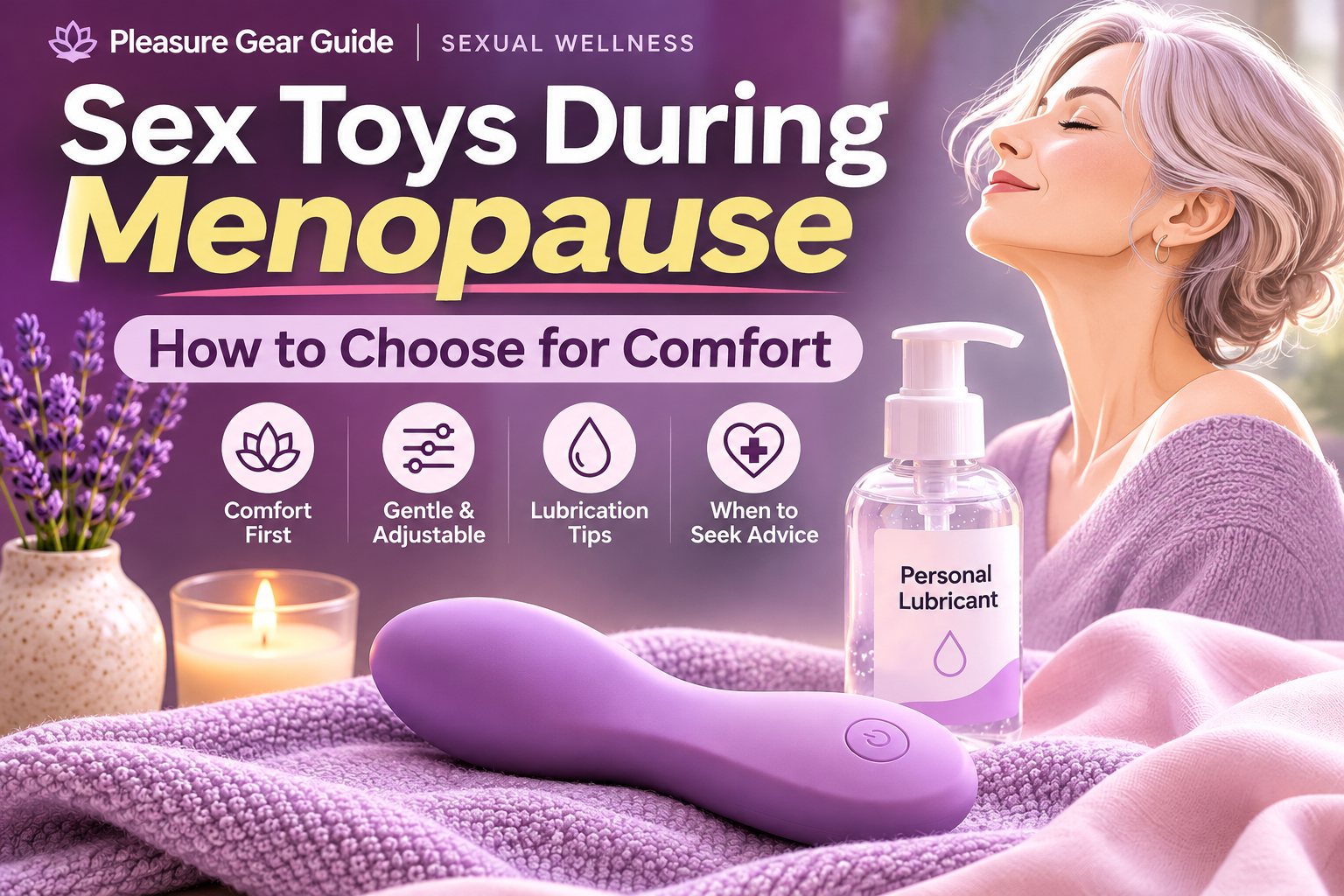
Sex Toys During Menopause: How to Choose for Comfort
Menopause can bring changes to sexual comfort, sensitivity, and arousal. A type of stimulation that once felt enjoyable may begin to feel different, while something you previously overlooked may become more appealing.
Vaginal dryness, changes in tissue elasticity, and discomfort during penetration are among the concerns some people experience during perimenopause and after menopause.
If you’re considering using a sex toy during this stage of life, the goal doesn’t have to be stronger stimulation or a more advanced device.
Comfort, control, and understanding your body’s changing preferences matter more.
This guide explains which sex toy features may be worth considering, how lubricants and vaginal moisturizers differ, and when discomfort should be discussed with a healthcare professional.
Quick Answer: What Sex Toys Are Best During Menopause?
For someone experiencing vaginal dryness or discomfort with penetration, a small external vibrator with adjustable intensity may be a practical starting point.
External toys allow stimulation without requiring vaginal insertion. Features such as low-intensity settings, smooth surfaces, easy-to-use controls, and clearly identified materials can make it easier to adjust the experience to your comfort level.
Consider these priorities:
- External stimulation: A useful option when penetration feels uncomfortable.
- Adjustable intensity: Allows you to start gently and change the sensation as needed.
- Smooth, easy-to-clean materials: Well-made, non-porous silicone is one practical option.
- Comfortable design: Size, shape, grip, and contact area can matter more than power.
- Appropriate lubricant: May help reduce friction and irritation.
There is no single best sex toy for everyone during menopause. Some people prefer gentle vibrations, others enjoy different sensations, and some may not want a toy at all.
Most importantly, a sex toy should not be used to push through pain or to treat an underlying medical condition.
What Can Feel Different During and After Menopause?
Menopause affects people differently. Some notice few changes in sexual comfort, while others experience symptoms that influence the way they approach intimacy.
1. Vaginal Dryness and Reduced Lubrication
As estrogen levels decrease, vaginal tissues may become drier, thinner, and less elastic.
This can increase friction during sexual activity, particularly when penetration is involved.
Dryness can also affect comfort during masturbation or external stimulation if a toy repeatedly rubs against sensitive skin.
A lubricant may reduce friction, but persistent dryness or discomfort may require additional treatment.
2. Changes in Sensitivity
Some people notice that familiar stimulation no longer feels quite the same.
You might find that:
- You prefer lighter or broader contact.
- Strong vibration feels overwhelming.
- It takes longer to become aroused.
- You need more time to discover what feels comfortable.
- Previously enjoyable activities are less appealing.
These experiences are individual. Menopause does not automatically mean that genital sensitivity decreases or that stronger stimulation is necessary.
Rather than increasing intensity immediately, it can be useful to experiment with different levels of pressure, positioning, and stimulation.
3. Discomfort With Penetration
Vaginal dryness and reduced elasticity can make insertion uncomfortable or painful for some people.
These symptoms may be part of genitourinary syndrome of menopause (GSM), a condition associated with hormonal changes affecting vaginal, vulvar, and urinary tissues.
However, pain can also have other causes, including infections, skin conditions, or pelvic floor problems.
If penetration hurts, you do not need to continue or switch to a larger toy.
External stimulation is an alternative, and ongoing pain deserves medical assessment.
For more information about menopause-related symptoms, see The Menopause Society’s sexual health guidance.
How to Choose a Sex Toy for Comfort
The most useful question is not necessarily “Which toy is the most powerful?”
It is “Which features give me the most control over comfort?”
Different toy designs create different sensations and require different levels of contact.
1. Small External Vibrators
Small external vibrators are designed to stimulate areas outside the vagina, including the clitoral region.
They may be worth considering because they:
- Do not require penetration.
- Can be repositioned easily.
- Often offer adjustable vibration settings.
- Are available in compact, straightforward designs.
A small device is not automatically gentle, however. Some compact vibrators are surprisingly powerful.
Look for a genuinely low starting intensity rather than assuming that a smaller toy will feel softer.
Our External Vibrators for Women guide explains the differences between bullet vibrators, handheld models, and other external designs.
2. Broad-Surface External Vibrators
Some external vibrators have wider, rounded contact surfaces.
These designs distribute stimulation across a larger area instead of concentrating it at one small point.
People who find direct, focused stimulation uncomfortable may prefer a broader contact area.
However, a large wand-style vibrator can still produce intense sensations. A wide head does not guarantee a gentle experience.
Look for adjustable settings, comfortable handling, and a contact surface that suits your preferences.
3. Air-Pulse or Pressure-Wave Devices
Air-pulse devices offer a different style of external stimulation from conventional vibrators.
Some people enjoy the sensation, while others find it too intense or prefer traditional vibration.
During menopause, sensitivity and tissue comfort can vary considerably.
If considering this category, pay attention to the lowest available intensity, the size and shape of the opening, and whether the device feels comfortable against the surrounding tissue.
Non-penetrative does not automatically mean irritation-free.
Stop if the device causes discomfort, tenderness, or an unpleasant pulling sensation.
4. Smaller Insertable Toys
Some people continue to enjoy vaginal insertion during and after menopause.
If insertion is comfortable, a smaller toy with a smooth surface and appropriately adjustable stimulation may be easier to manage than a large or highly textured design.
Look for:
- A manageable diameter.
- A smooth, intact surface.
- Clearly identified, non-porous materials.
- A shape designed specifically for vaginal use.
- Manufacturer instructions covering cleaning and lubricant compatibility.
Use appropriate lubricant when needed, and never force insertion.
If penetration has become painful, seek medical advice rather than using a toy to stretch the vaginal tissues on your own.
Medical vaginal dilators are different from ordinary pleasure products and may be recommended as part of an individualized treatment plan.
Comfort-First Comparison Table
| Toy Type | Potential Advantage | What to Check |
|---|---|---|
| Small external vibrator | No penetration required; easy to position | Lowest intensity and focused contact |
| Broad-surface external vibrator | Wider area of stimulation | Weight, grip, and vibration strength |
| Air-pulse device | Different type of external sensation | Pressure intensity and tissue comfort |
| Small insertable toy | Option when insertion is comfortable | Diameter, surface, lubrication, and pain |
| Medical vaginal dilator | Used for specific clinical conditions | Healthcare guidance; not a substitute for treatment |
These are design considerations, not medical recommendations or a ranking of individual products.
5. Material, Grip, and Cleaning Matter Too
Comfort involves more than the type of stimulation.
A smooth toy with a comfortable grip may be easier to use than a product that is awkward to hold or requires constant repositioning.
For many buyers, clearly identified, non-porous silicone is a practical material because it is generally straightforward to clean and available in different firmness levels.
However, material quality varies by manufacturer, and silicone does not automatically mean a product will feel comfortable for everyone.
If you are comparing silicone with softer materials such as TPE, read our Silicone vs TPE Sex Toys guide before choosing.
Whatever the material, follow the manufacturer’s cleaning instructions, clean the toy after use, allow it to dry properly, and inspect it for damage.
If sharing a toy, take additional precautions against infection transmission, including appropriate barrier use and cleaning between users.
Lubricant vs. Vaginal Moisturizer: What Is the Difference?
Lubricants and vaginal moisturizers can both be useful during menopause, but they serve different purposes.
Understanding the distinction can help you avoid expecting a product to do something it was not designed to do.
What Does a Lubricant Do?
A personal lubricant reduces friction during sexual activity.
It may be useful when using a vibrator, during partnered intimacy, or when skin-to-skin contact feels uncomfortable because of dryness.
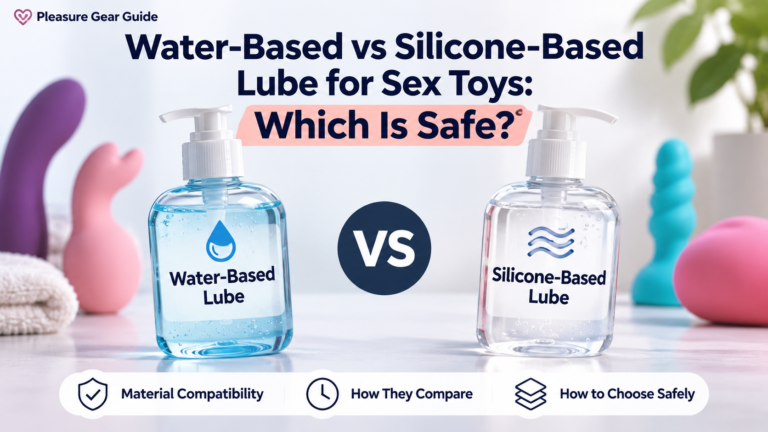
Water-based lubricants are often a practical starting choice for sex toys because they are compatible with many toy materials.
Look for a lubricant intended for intimate use, with clearly disclosed ingredients. If your skin is sensitive, an unfragranced formula without warming or cooling additives may be preferable.
Silicone-based lubricants generally remain slippery for longer, but they may not be compatible with some silicone toys.
Always check the manufacturer’s instructions.
For a detailed comparison, see our Water-Based vs Silicone-Based Lube for Sex Toys guide.
What Does a Vaginal Moisturizer Do?
Vaginal moisturizers are designed to help maintain moisture in vaginal tissues, rather than simply reducing friction during sexual activity.
They are often used on a regular schedule according to the product instructions, including on days when no sexual activity occurs.
Unlike lubricants, vaginal moisturizers are not primarily designed to provide immediate slipperiness during toy use.
A person may benefit from both products for different reasons.
Lubricant vs. Vaginal Moisturizer at a Glance
| Feature | Personal Lubricant | Vaginal Moisturizer |
|---|---|---|
| Main purpose | Reduce friction during sexual activity | Help maintain vaginal moisture |
| When used | Before or during sexual activity | Regularly, as directed |
| Useful with sex toys? | Yes, when compatible with the toy | Not a replacement for toy lubricant |
| Treats underlying GSM-related changes? | No | Does not reverse hormonal changes |
| Medical advice needed? | If irritation or symptoms persist | If dryness or symptoms persist |
Neither a lubricant nor a vaginal moisturizer should be considered a cure for GSM.
A healthcare professional may recommend additional treatment, including prescription local vaginal estrogen or other options, depending on your symptoms and medical history.
When to Stop and Talk to a Healthcare Professional
Sex toys can be part of a satisfying sexual experience, but they should not be used to ignore persistent pain or other symptoms.
Stop using a device if you experience burning, sharp pain, bleeding, significant irritation, or persistent numbness.
Consider speaking with a healthcare professional if you have:
- Pain during penetration or sexual activity.
- Vaginal dryness that continues despite self-care.
- Persistent itching, burning, or unusual discharge.
- Recurrent urinary symptoms.
- Discomfort that affects everyday life.
- New or worsening pelvic pain.
Any vaginal bleeding after menopause should be medically evaluated, even if it happens only once or involves a small amount of spotting.
Bleeding after menopause is not always caused by a serious condition, but it should never simply be attributed to sex toy use or vaginal dryness without assessment.
Menopause-related discomfort may have effective medical treatments. Seeking help does not mean giving up sexual pleasure.
For more information, see the NHS guides to vaginal dryness and postmenopausal bleeding.
Frequently Asked Questions
Are sex toys safe to use during menopause?
Sex toys can be used during menopause when they are appropriate for the person’s health, comfort, and intended activity.
Choose a well-made device, follow the manufacturer’s instructions, use suitable lubricant when needed, and stop if discomfort occurs.
A toy should not be used as a substitute for medical care when symptoms such as persistent pain or bleeding are present.
What type of vibrator is best for vaginal dryness?
If vaginal dryness makes penetration uncomfortable, an external vibrator with adjustable intensity may be a practical option because it does not require insertion.
A suitable lubricant may also help reduce friction.
However, a vibrator does not treat the underlying hormonal changes that can cause vaginal dryness.
Can vibrators improve sensitivity during menopause?
Some people find that vibration helps them explore different sensations or makes sexual stimulation more enjoyable.
However, there is no guarantee that a particular vibrator will improve sensitivity, and stronger vibration is not necessarily better.
Persistent changes in sensation should be discussed with a healthcare professional, especially when accompanied by pain or other symptoms.
Should I avoid insertable sex toys after menopause?
Not necessarily.
People who find insertion comfortable may continue to enjoy insertable toys.
The important considerations are size, surface, lubrication, individual comfort, and appropriate hygiene.
If insertion causes pain, stop and seek medical advice rather than trying to force your body to adapt.
Is water-based lubricant better during menopause?
Water-based lubricant is often a useful starting point, particularly with silicone toys.
However, the best lubricant depends on your skin sensitivity, the product’s ingredients, and the material of the toy.
Silicone-based lubricants may provide longer-lasting slipperiness, but compatibility with the toy must be confirmed.
Can sex toys treat vaginal atrophy or GSM?
No ordinary consumer sex toy should be considered a treatment for vaginal atrophy or genitourinary syndrome of menopause.
Pleasurable sexual stimulation may be part of someone’s sexual well-being, but it does not replace medical assessment or evidence-based treatments.
If symptoms are persistent or painful, ask a qualified healthcare professional about treatment options.
Final Thoughts: Choose Comfort, Not More Intensity
Menopause does not have to mark the end of sexual exploration.
However, your preferences and physical needs may change over time.
For some people, a small external vibrator with gentle, adjustable stimulation is an easy place to begin. Others may prefer a broader contact surface, a different sensation, or no device at all.
What matters most is having control over the experience.
Choose well-documented materials, pay attention to friction, give yourself time, and avoid pushing through discomfort.
The right sex toy during menopause is not the most powerful or expensive one. It is one that respects your comfort, preferences, and health.
Sources and Further Reading
The following resources were consulted for medical background, vaginal dryness, menopause-related sexual health, and safe sex toy use.
- The Menopause Society — Sexual Health
Information about sexual changes around menopause, vaginal dryness, and available treatments.
https://menopause.org/patient-education/menopause-topics/sexual-health - American College of Obstetricians and Gynecologists (ACOG) — Vulvovaginal Health
Information about vaginal and vulvar changes, genitourinary syndrome of menopause, and related symptoms.
https://www.acog.org/womens-health/faqs/vulvovaginal-health - NHS — Vaginal Dryness
Guidance about lubricants, vaginal moisturizers, and when to seek medical advice.
https://www.nhs.uk/symptoms/vaginal-dryness/ - NHS — Postmenopausal Bleeding
Guidance explaining why vaginal bleeding after menopause requires medical assessment.
https://www.nhs.uk/symptoms/post-menopausal-bleeding/ - ACOG — Your Sexual Health
General information about sexual comfort, pain, lubrication, and sexual well-being.
https://www.acog.org/womens-health/faqs/your-sexual-health - Sexual Health St Helens — After Sex: Things You Should Know
Practical guidance on cleaning sex toys and reducing infection risks.
https://www.sexualhealthsthelens.nhs.uk/adult—after-sex
Editorial Note
This article is intended for general educational purposes and is not a substitute for individualized medical advice.
It has not been medically reviewed by a healthcare professional. The information is based on publicly available medical guidance and general product characteristics.
Pleasure Gear Guide has not independently tested the products or device categories discussed in this article.
Sex toy comfort and suitability vary by individual and manufacturer. Always follow the instructions for your specific device and consult an appropriate healthcare professional for persistent pain, bleeding, irritation, or other concerning symptoms.