Wearable Vibrators for Couples: How to Choose the Right Type
Wearable vibrators can be an appealing option for couples who want to add stimulation without constantly holding a device.
However, wearable designs vary considerably in shape, fit, controls, and intended use. Understanding these differences can help beginners avoid choosing a product that is uncomfortable or unnecessarily complicated.
Quick Verdict: What Is the Best Wearable Vibrator for Beginners?
For most beginners, a comfortable, easy-to-position wearable vibrator with simple controls and adjustable vibration settings is a practical starting point.
Prioritize a design that stays comfortably in place, uses nonporous materials suitable for body contact, and is easy to clean according to the manufacturer’s instructions.
Remote-controlled models can be convenient for couples, but smartphone app connectivity is not essential for beginners. If you prefer app-based controls, consider connection reliability, privacy settings, and device compatibility before buying.
The best wearable vibrator is one that fits your intended use, feels comfortable, and is easy for both partners to operate. More features do not necessarily mean a better experience.
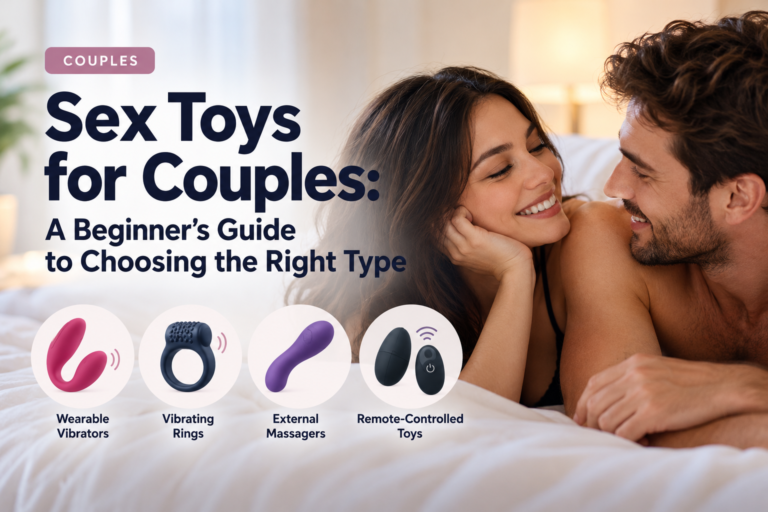
If you’re still comparing different products for shared intimacy, our Sex Toys for Couples beginner’s guide
What Is a Wearable Vibrator?
A wearable vibrator is designed to remain positioned against or on the body while operating.
Some products are intended primarily for external stimulation, while others use a shape that helps keep the device in place.
Depending on the design, wearable vibrators may be used individually or incorporated into partnered activity.
Many models also include remote-control features, allowing one partner to change settings without directly handling the device.
Why Couples May Choose a Wearable Vibrator
The main advantage is hands-free or reduced-hands use.
With a handheld vibrator, one person normally needs to keep the product positioned during use.
A wearable design can make it easier to maintain stimulation while both partners remain more involved in the experience.
Remote controls can also add an interactive element by allowing one partner to adjust intensity or patterns for the other.
For some couples, this combination of convenience and shared control is the main attraction.
Fit Is One of the Most Important Factors
A wearable vibrator is only useful if it stays comfortably in position.
Product designs differ significantly, so look carefully at the manufacturer’s sizing information, dimensions, and intended placement.
A product that is too large, too rigid, or poorly shaped for the user may be uncomfortable even if its motor and features are excellent.
For beginners, simpler and more flexible designs may be easier to position.
Comfort should take priority over the number of vibration modes or app functions.
External vs. Insertable Wearable Designs
Wearable vibrators generally fall into different design approaches.
Some remain entirely external and are designed to sit against the body.
Others include an insertable section that helps hold the product in place while an external section provides additional stimulation.
These designs can feel very different.
For someone new to wearable toys, an external model may appear less complicated, while an insertable wearable may provide a more secure fit for users who are comfortable with that style.
If you are still comparing different toy categories for women, our Sex Toys for Women beginner’s guide explains external, internal, and dual-stimulation designs in more detail.
Remote-Controlled Wearable Vibrators
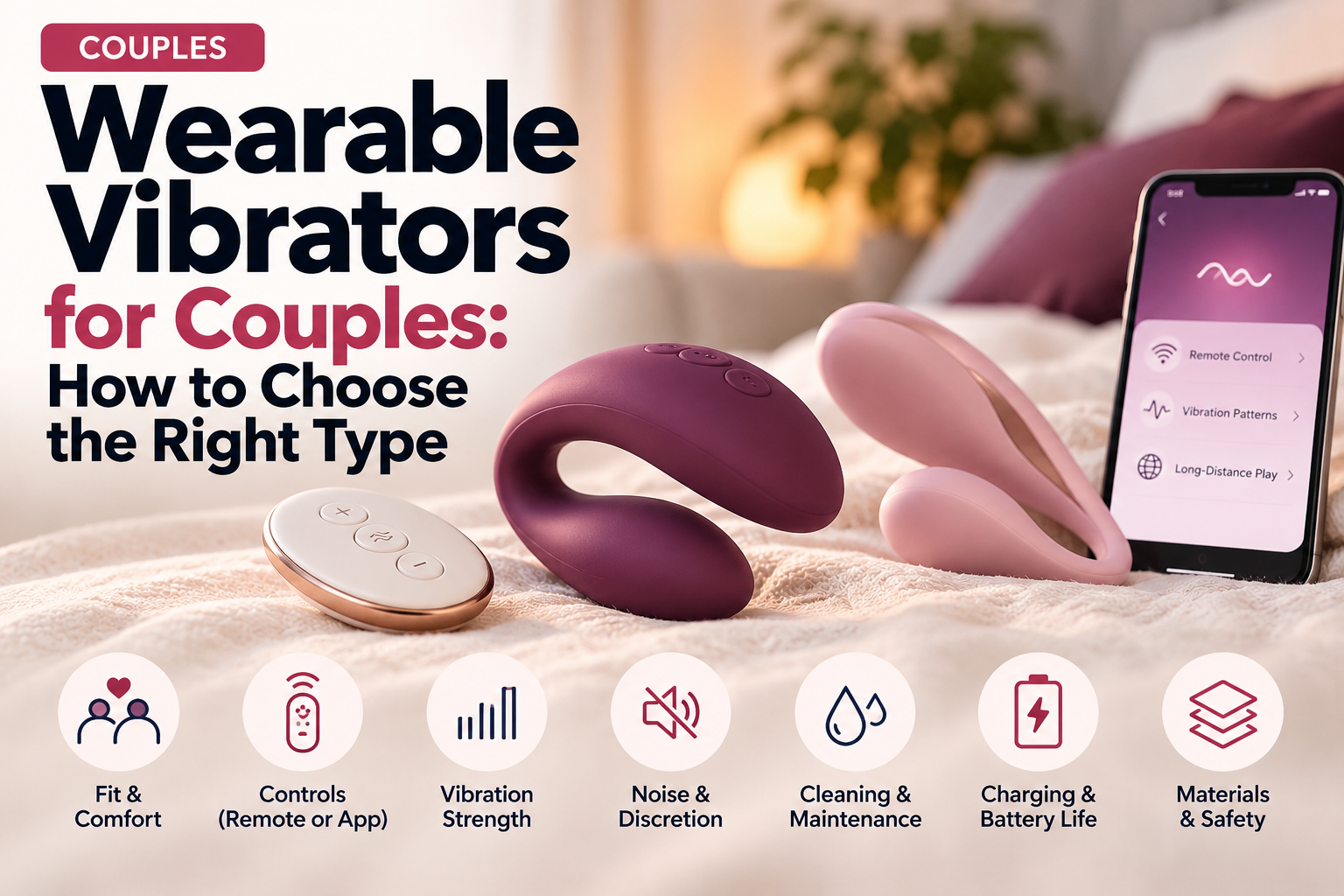
Many wearable vibrators include a dedicated wireless remote.
This can be useful because the controls are usually simple and do not require installing an app.
A typical remote may allow the user to change intensity, switch patterns, or turn the device on and off.
Why Beginners May Prefer a Physical Remote
A dedicated remote is usually straightforward.
There is no account setup, smartphone pairing, or software interface to learn.
For couples who simply want one partner to control the toy for the other, a basic remote-controlled model may provide everything they need.
App-Controlled Wearable Vibrators
Some wearable products connect to a smartphone through Bluetooth or another wireless connection.
Apps may provide more control than a physical remote, including customized vibration patterns or additional interactive features.
Certain products may also support control over longer distances through an internet connection.
This can make app-controlled toys appealing to couples who want more flexibility.
However, they also introduce additional considerations.
What to Check Before Choosing an App-Controlled Model
Before buying, consider whether the app supports your phone and operating system.
Check whether an account is required and what permissions the app requests.
It is also worth reviewing the manufacturer’s privacy information and update history.
Bluetooth range, internet connectivity, and phone settings can affect reliability.
If you primarily intend to use the product while both partners are in the same room, a dedicated remote may be simpler than an app.
Controls and Ease of Use
Wearable vibrators can range from very simple to highly configurable.
Beginners generally benefit from controls that are easy to understand without repeatedly looking at instructions.
Useful features may include:
- Separate intensity and pattern controls
- Clearly identifiable buttons
- Easy power on and off
- A physical remote or straightforward app interface
- Memory of the last-used setting
More vibration patterns do not necessarily make a product better.
A few useful intensity levels may be more practical than dozens of similar patterns.
Vibration Strength and Adjustment
Maximum power is not the only factor that matters.
For a wearable device, the ability to start at a low intensity and gradually increase it can be especially useful.
Products with several clearly separated intensity levels provide more flexibility for different preferences.
Couples sharing control should communicate about intensity rather than assuming that stronger settings are always preferable.
Noise and Discretion
Wearable vibrators are often marketed as discreet, but noise varies by product and setting.
Higher vibration levels may produce more audible sound.
The way the device contacts the body, clothing, furniture, or bedding can also affect perceived noise.
If discretion matters, consider manufacturer specifications and independent reviews rather than relying only on advertising terms such as “whisper quiet.”
Size and Portability
Wearable models are often compact, which can make them convenient for storage or travel.
However, compact size alone does not guarantee comfort.
Check the dimensions and shape, particularly if the product contains an insertable component or is designed to fit closely against the body.
Also consider whether the device requires a separate remote, charging cable, storage pouch, or magnetic charger that you will need to keep with it.
Material Matters
Material information should be clearly provided by the manufacturer.
Many modern wearable vibrators use silicone or other soft-touch materials around the areas that contact the body.
Other components may use ABS plastic or similar materials.
Look for clear documentation explaining the product’s materials and care requirements.
If a manufacturer does not clearly identify what the contact surfaces are made from, consider another option.
Flexibility and Comfort
Wearable designs may include flexible sections to help the device adapt to different body shapes.
This can be useful because a rigid product may not fit every user equally well.
However, very flexible devices can sometimes require more adjustment to keep them positioned correctly.
There is no universal ideal.
The best design is one that feels secure without creating uncomfortable pressure.
Waterproofing and Water Resistance
Because wearable vibrators contain electronics, check their water-resistance rating before cleaning or using them around water.
A product described as water-resistant may tolerate splashes but may not be suitable for full submersion.
A waterproof product may offer easier cleaning, but you should still follow the manufacturer’s instructions.
Never assume that a sealed-looking rechargeable device is fully waterproof.
Cleaning and Maintenance
Wearable vibrators should be cleaned according to the manufacturer’s instructions after use.
Models with smooth surfaces and fewer seams are generally easier to clean.
Pay attention to joints, charging contacts, and any areas where moisture can collect.
After cleaning, allow the product to dry fully before storage.
If the product uses a separate remote control, check whether the remote itself is waterproof before washing it.
Lubricant Compatibility
Lubricant can improve comfort with some wearable designs, particularly those with insertable components.
However, compatibility depends on the product material.
Manufacturers often recommend a specific type of lubricant.
Follow the instructions for the particular product rather than assuming that every lubricant can be used with every toy.
Charging and Battery Life
Most modern wearable vibrators are rechargeable.
Charging methods may include USB cables, magnetic connectors, or proprietary chargers.
Before buying, consider how long the product takes to charge and how long the manufacturer states that it can operate between charges.
For app-controlled models, both the toy and the controlling smartphone need sufficient battery power.
A product that has been stored for a long period should also be charged before use.
Remote Range and Connection Reliability
Wireless control range varies considerably.
A dedicated remote may work well at short distances but may not be designed for use across large spaces.
Bluetooth-controlled toys also depend on the phone remaining within an appropriate connection range.
Internet-enabled control can extend that range substantially, but it depends on app support and internet connectivity.
Choose based on how you realistically expect to use the device rather than paying for connectivity features you may never need.
Privacy and App Security
Connected products deserve additional attention to privacy.
If a toy uses an app, review what personal information is required to create an account and whether location, contacts, or other permissions are requested.
Use a strong, unique password if an account is required.
It is also sensible to keep the app and phone operating system updated.
For people who prefer to minimize connected-device concerns, a physical remote-controlled product can be a simpler alternative.
Price: What Should Beginners Spend?
Wearable vibrators range from relatively inexpensive remote-controlled products to premium app-connected devices.
More expensive products may provide stronger motors, higher-quality materials, better connectivity, or more refined apps.
However, beginners do not necessarily need premium features.
Start by deciding which features matter most:
Fit, comfort, basic control, cleaning, and reliable operation should usually come before advanced app functionality.
Which Type Is Best for Beginners?
A simple remote-controlled wearable vibrator is often the easiest starting point.
It provides the core benefits of a wearable design without requiring complicated setup.
Choose a physical-remote model if you want:
- Simple operation
- Minimal setup
- Shared control while together
- Fewer connectivity concerns
Choose an app-controlled model if you want:
- More customizable controls
- Smartphone operation
- Additional interactive features
- Potential long-distance control, where supported
The best option depends on how you actually plan to use it.
Common Beginner Mistakes
One common mistake is buying primarily based on the number of vibration patterns.
Fit and comfort usually matter more.
Another is assuming every wearable model works equally well for every body shape.
Also avoid assuming that “remote controlled” automatically means long-distance control. A basic remote and an internet-connected app are very different technologies.
Finally, check cleaning, charging, and material information before buying rather than after the product arrives.
A Simple Buying Checklist
Before choosing a wearable vibrator, ask yourself:
- Is the design appropriate for the type of stimulation I want?
- Does the size and shape look comfortable?
- Are the controls simple enough?
- Do I want a physical remote or an app?
- Is the material clearly identified?
- Is it easy to clean?
- Is the water-resistance level suitable for my needs?
- Is the charging method convenient?
- Do I actually need long-distance control?
- Is the price reasonable for the features I will use?
Answering these questions can eliminate many unsuitable products quickly.
Final Thoughts
Wearable vibrators can be a versatile option for couples because they combine stimulation with hands-free or reduced-hands use.
For beginners, the most important considerations are fit, comfort, controls, materials, cleaning, and reliable operation.
A physical remote-controlled model is often the simplest way to start.
App-controlled products can add customization and long-distance features, but they also introduce more setup, connectivity, and privacy considerations.
Start with the features you genuinely expect to use rather than the longest feature list.
Once you understand what works for you and your partner, choosing a more specialized wearable product becomes much easier.