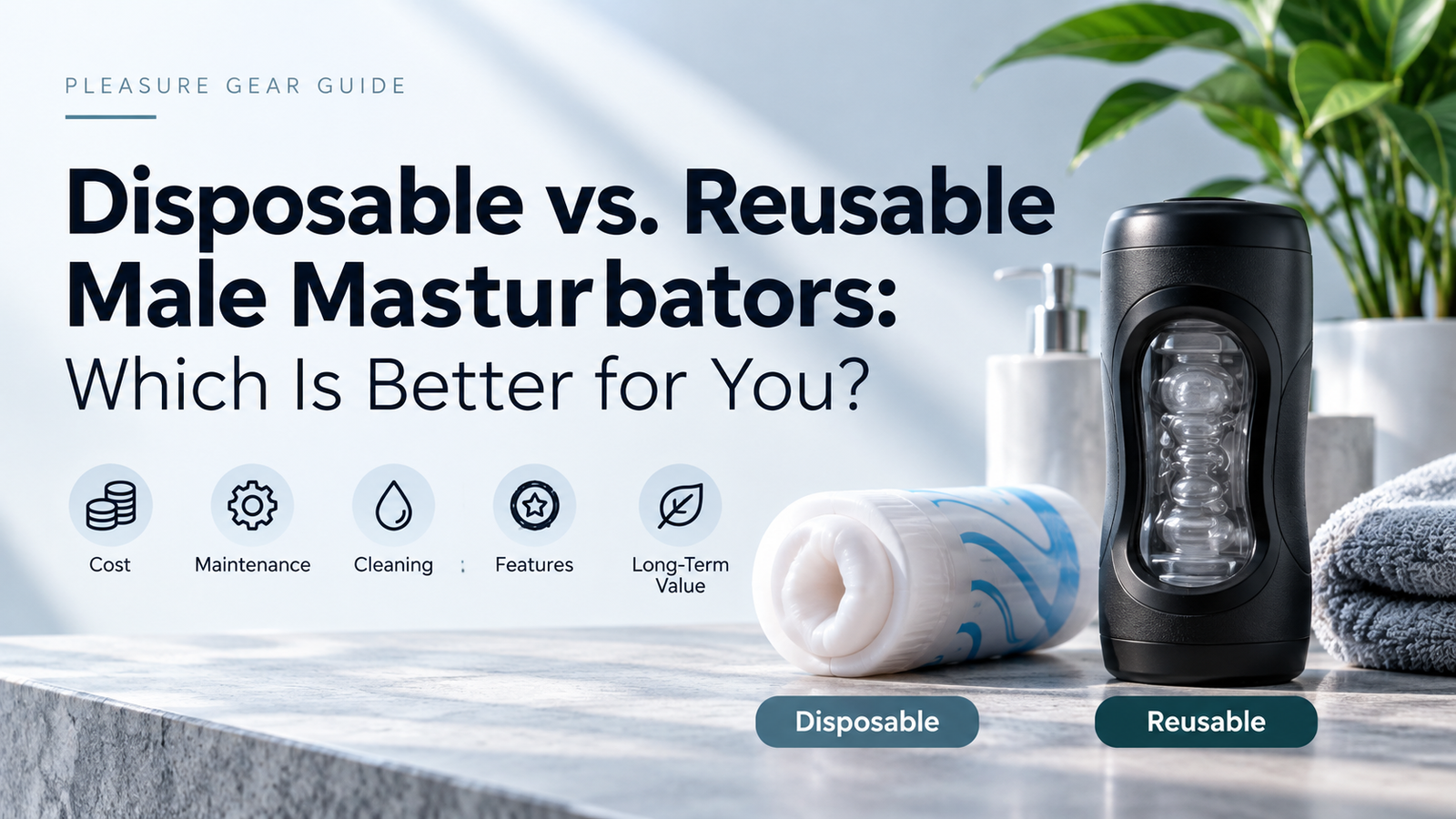
Disposable vs. Reusable Male Masturbators: Which Is Better for You?
Choosing between disposable and reusable male masturbators is one of the first decisions many beginners face.
Both options have advantages, but differences in convenience, maintenance, and long-term cost can make one more suitable for your needs.
Quick Verdict: Disposable or Reusable Male Masturbator?
Choose a disposable male masturbator if convenience, minimal maintenance, and a lower initial cost are your priorities. Single-use models are designed to be discarded after use, while some limited-use products may have different care requirements.
Choose a reusable male masturbator if you expect to use it regularly and are comfortable with cleaning, drying, and storing it properly. Although reusable models often cost more upfront, they may offer better long-term value depending on frequency of use and product durability.
Our verdict: Disposable models can be a practical introduction for occasional use, while reusable sleeves may be more economical for frequent use. Neither option is universally better.
Before buying, compare product materials, dimensions, lubricant compatibility, cleaning instructions, expected lifespan, and total cost over time.
If you’re new to this category, our guide to choosing your first male masturbator explains the main product types and features to consider.
Disposable Male Masturbators
Disposable male masturbators are designed for single use or a limited number of uses, depending on the product and manufacturer instructions.
They are generally simple, compact, and relatively inexpensive to try.
Advantages of Disposable Models
One of the biggest advantages is convenience.
Disposable models may be appealing if you:
- are trying a male masturbator for the first time;
- do not want to spend much initially;
- prefer minimal cleaning and maintenance;
- want something compact and easy to store; or
- only expect to use the product occasionally.
They can also be useful for learning what kinds of textures, shapes, and designs you prefer before investing in a more expensive reusable model.
Disadvantages of Disposable Models
The main drawback is long-term cost.
Although an individual product may be inexpensive, regularly replacing disposable products can eventually cost more than purchasing a reusable option.
Disposable models may also offer fewer features and less customization than more advanced reusable products.
Another consideration is waste. Products intended for limited use naturally create more discarded material over time.
Reusable Male Masturbators
Reusable models are designed to be cleaned, dried, stored, and used again.
They range from simple manual products to more advanced designs with removable sleeves, interchangeable parts, or powered features.
Advantages of Reusable Models
Reusable products may offer better value for people who expect to use them regularly.
Common advantages include:
- lower cost per use over time;
- a wider range of materials and textures;
- more sizes and designs;
- greater choice of features; and
- potentially longer product life when properly maintained.
Some reusable products also offer replacement sleeves or individual components, which can extend the life of the main device.
Disadvantages of Reusable Models
Reusable products require more maintenance.
Cleaning and drying the product after use is an important part of ownership, and some designs are easier to maintain than others.
They may also have a higher upfront price.
Powered models can introduce additional considerations such as charging, batteries, electronic components, and more complicated cleaning procedures.
Cost: Which Is Cheaper?
The answer depends largely on how often you use the product.
A disposable product usually has a lower purchase price, making it easier to try without a large commitment.
However, repeated purchases can add up.
A reusable model may cost considerably more initially, but frequent users may find that the cost per use becomes lower over time.
When comparing prices, consider more than the initial purchase price.
Possible additional costs include:
- replacement sleeves or inserts;
- compatible lubricants;
- cleaning products;
- replacement parts;
- batteries or charging accessories; and
- shipping costs.
For occasional use, disposable products can remain economical. For regular use, a reusable model may offer better long-term value.
Cleaning and Maintenance
This is one of the biggest differences between the two categories.
Disposable or limited-use models generally require less maintenance.
Reusable products must be cleaned according to the manufacturer’s instructions after use and allowed to dry properly before storage.
Before purchasing a reusable product, check:
- whether internal parts are removable;
- whether the product can be rinsed or washed;
- whether electronic parts must remain dry;
- how the product should be dried;
- whether special cleaning products are recommended; and
- how it should be stored.
A product may have excellent features, but if its cleaning routine is inconvenient for you, it may not be the right choice.
Convenience and Discretion
Disposable models generally have an advantage in simplicity.
They often require little setup and are easy to store because of their relatively compact size.
Reusable products vary considerably.
Simple manual models may still be compact, while larger automatic devices may require more storage space and charging equipment.
If discretion is important, consider:
- product size;
- packaging;
- storage requirements;
- whether the device produces noise; and
- whether it requires visible charging accessories.
Convenience should be considered alongside price and features.
Materials and Design
Reusable products generally provide a wider selection of materials, internal textures, shapes, and construction styles.
Disposable models tend to prioritize simplicity and affordability.
For either type, check the manufacturer’s product information before buying.
Useful information includes:
- materials used;
- dimensions;
- recommended lubricants;
- cleaning instructions; and
- intended number of uses.
Do not assume that a higher price automatically means better quality or suitability.
The best product is the one whose design and maintenance requirements fit your preferences.
Which Is Better for Beginners?
For someone completely new to the category, a disposable or inexpensive limited-use model can be a practical starting point.
It allows you to explore the category with relatively little financial commitment.
However, beginners who already expect regular use may prefer starting with a basic reusable model.
A simple reusable product can provide good long-term value without requiring the complexity of an automatic device.
The key question is not simply whether you are a beginner.
It is how you expect to use the product.
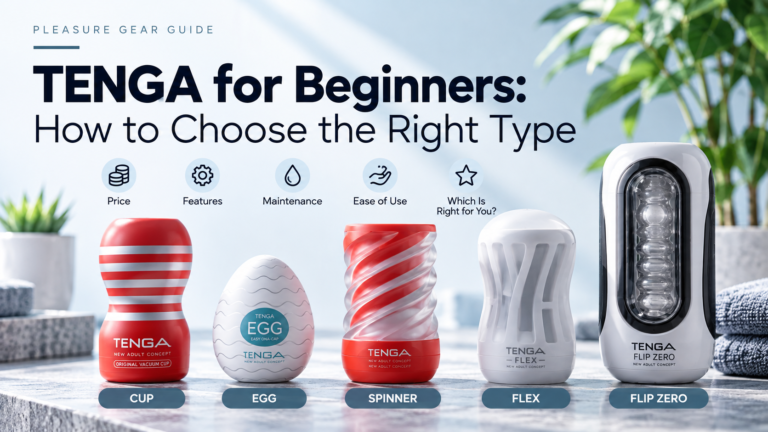
If you are considering TENGA specifically, our TENGA beginner guide explains the differences between its main product series.
Choose Disposable If…
A disposable model may be more suitable if:
- you want to try the category before spending more;
- you expect only occasional use;
- convenience is more important than long-term cost;
- you want minimal maintenance; or
- you prefer a compact product.
Choose Reusable If…
A reusable model may be more suitable if:
- you expect regular use;
- long-term value is important;
- you are comfortable with cleaning and drying;
- you want more choices in materials and features; or
- you prefer a product designed for extended ownership.
Environmental Considerations
Reusable products generally generate less product waste over repeated use, although packaging, replacement parts, and product lifespan also matter.
Disposable models naturally require more frequent replacement.
Environmental impact may not be the deciding factor for every buyer, but it is worth considering alongside cost, convenience, and maintenance.
Final Thoughts
Disposable and reusable male masturbators serve different needs.
Disposable models offer a simple and relatively inexpensive way to explore the category. Reusable models require more care but may provide better long-term value and a wider selection of features.
For occasional use or a first experiment with the category, disposable products can make sense.
For regular use, a simple reusable model may be the more practical choice.
Before purchasing either type, check the dimensions, materials, cleaning requirements, expected lifespan, and total cost rather than choosing based only on the initial price.