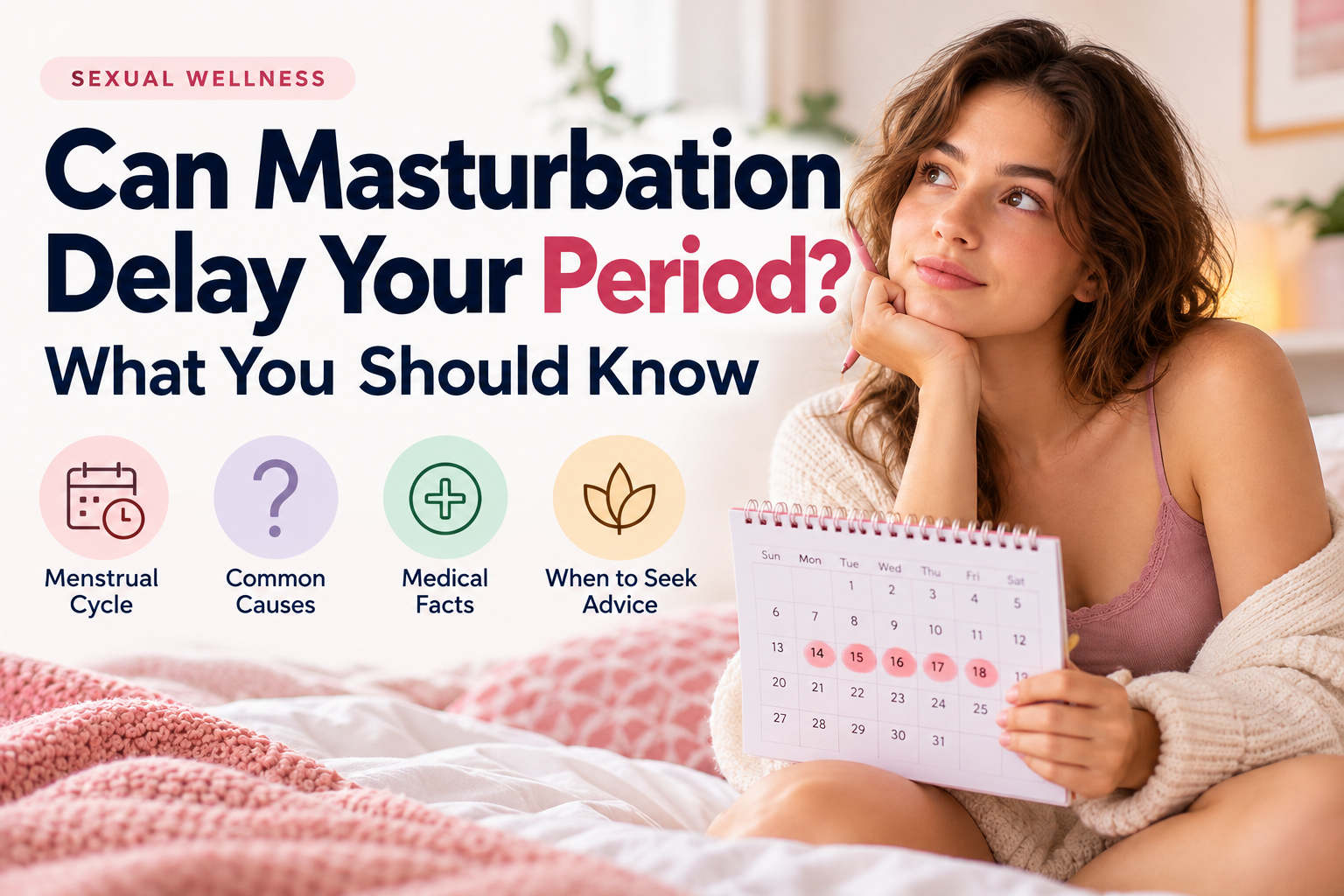
Can Masturbation Delay Your Period? What You Should Know
Masturbation is a normal part of sexual wellness, but it can sometimes raise questions about how the body works.
If your period is late after masturbating, you might wonder whether sexual stimulation, orgasm, or vibrator use could have affected your menstrual cycle.
The timing may seem connected, but that does not necessarily mean one caused the other.
Quick Answer: Can Masturbation Delay Your Period?
No. Masturbation is not known to delay your period or change the timing of your menstrual cycle.
According to Planned Parenthood, masturbation and sex toy use do not cause periods to arrive earlier or later.
If your period is delayed, other factors are more likely to explain the change. These can include pregnancy, stress, significant weight changes, intense exercise, hormonal contraception, and certain medical conditions.
Masturbation itself does not cause pregnancy. However, pregnancy may be possible if semen or sperm-containing fluid enters the vagina during sexual activity.
A late period does not always indicate a health problem. Menstrual cycles can vary naturally, even among people who usually have regular periods.
This guide explains why masturbation does not typically affect menstrual timing, what can cause a delayed period, and when to seek medical advice.
Does Masturbation Affect Your Menstrual Cycle?
The menstrual cycle is regulated by interactions between hormones and the reproductive system.
These hormonal changes influence ovulation and the development and shedding of the uterine lining.
Masturbation and orgasm may produce short-term physical responses, including pelvic muscle contractions, changes in heart rate, and temporary changes in relaxation or arousal.
However, these responses are not known to cause lasting changes in the hormonal processes that determine menstrual timing.
Planned Parenthood specifically explains that masturbation does not make periods start earlier or later.
If your period arrives later than expected, masturbation is unlikely to be the explanation.
For a broader discussion of sexual desire and changes throughout the menstrual cycle, read our Masturbation and Your Menstrual Cycle: Is There a Best Time? guide.
Why Might Your Period Be Late?
There are several possible reasons for a delayed or missed period.
Understanding these factors can help you decide whether the change is likely to be temporary or requires further attention.
1. Stress and Emotional Changes
Stress can affect the hormonal processes involved in menstruation.
Significant emotional stress may contribute to changes in ovulation and menstrual timing.
If you have experienced unusual stress, anxiety, or major life changes, these factors may be relevant.
However, stress should not automatically be assumed to be the cause of a missed period.
2. Pregnancy
Pregnancy is an important possibility to consider when a period is late.
If you have had sexual activity that could result in sperm entering the vagina, taking a pregnancy test may be appropriate.
Masturbation alone does not cause pregnancy.
However, partnered sexual activity involving semen near or inside the vaginal opening can create a pregnancy risk, even if masturbation also occurred.
If pregnancy is possible, a home pregnancy test is generally most reliable from the first day of a missed period.
3. Changes in Weight or Exercise
Significant changes in body weight, calorie intake, or physical activity may affect menstrual cycles.
For example, substantial weight loss, inadequate nutrition, or unusually intense exercise can sometimes contribute to missed or irregular periods.
These changes may affect the body’s hormonal regulation.
4. Hormonal Contraception
Hormonal birth control can change bleeding patterns.
Depending on the method, periods may become lighter, less regular, or stop altogether.
Changes after starting, stopping, or switching contraception may also affect menstrual timing.
If you have questions about your contraceptive method, consult a healthcare professional.
5. Medical Conditions
Certain medical conditions may contribute to irregular or missed periods.
Examples include:
- Polycystic ovary syndrome (PCOS)
- Thyroid disorders
- Other conditions affecting hormonal regulation
A healthcare professional can help determine whether testing or treatment is appropriate.
6. Natural Cycle Variation
Not every menstrual cycle lasts exactly 28 days.
According to the American College of Obstetricians and Gynecologists (ACOG), menstrual cycles commonly range from approximately 21 to 35 days in adults.
Occasional differences in cycle length do not automatically indicate a medical problem.
However, repeated or unexplained changes deserve attention.
Can Orgasm Make Your Period Start Earlier?
There is no reliable evidence that orgasm can consistently cause menstruation to begin earlier than it otherwise would.
Orgasm can involve temporary pelvic muscle contractions, but these contractions do not mean that the hormonal timing of menstruation has changed.
Some people may notice bleeding or the start of a period shortly after sexual activity.
If menstruation was already about to begin, the timing may simply be coincidental.
Orgasm should not be considered a reliable method for starting or delaying a period.
If you experience unexpected bleeding after sexual activity, particularly if it happens repeatedly, seek medical advice rather than assuming it is menstrual bleeding.
Can Using a Vibrator Delay Your Period?
No. Ordinary vibrator use is not known to delay menstruation.
A vibrator provides physical stimulation, but this does not mean it changes the hormonal processes responsible for menstrual timing.
Planned Parenthood specifically addresses this question and explains that using sex toys does not change the menstrual cycle.
As with other forms of sexual stimulation, comfort and safe use remain important.
Stop using a device if it causes pain, irritation, or persistent numbness.
If you have questions about temporary sensitivity changes, our Can You Become Too Used to a Vibrator? What to Know About Sensitivity article provides additional information.
What Should You Do If Your Period Is Late?
If your period is late, try not to assume that masturbation caused the delay.
Instead, consider the following steps.
Check Whether Pregnancy Is Possible
If pregnancy is possible, take a pregnancy test according to the manufacturer’s instructions.
Most home pregnancy tests can be used from the first day of a missed period.
If you do not know when your next period is due, the NHS recommends testing at least 21 days after the last episode of unprotected sex.
Testing too early can produce a negative result even when pregnancy is present.
If the result is negative but your period still does not arrive, repeat testing as directed or contact a healthcare professional.
Review Recent Changes
Consider whether you have recently experienced significant stress, changes in weight, intense exercise, illness, or changes in contraception.
These details may help explain changes in your cycle.
Track Your Menstrual Cycle
Keeping a record of your periods can help you recognize patterns.
Useful information includes:
- The first day of each period
- Approximate cycle length
- Changes in bleeding
- Associated symptoms
- Significant changes in health or medication
Cycle-tracking apps or a simple calendar can help.
Seek Medical Advice When Necessary
Contact a healthcare professional if your periods become persistently irregular or stop without an obvious explanation.
The NHS recommends seeking medical advice if you have missed three periods in a row.
You should also seek evaluation for persistent pelvic pain, unusual bleeding, or other concerning symptoms.
If pregnancy is possible and you experience severe abdominal pain, fainting, or significant bleeding, seek urgent medical attention. These symptoms can sometimes indicate a serious condition, including ectopic pregnancy.
Frequently Asked Questions
Can Masturbating Every Day Delay My Period?
No. There is no established evidence that daily masturbation changes menstrual timing.
Frequency alone does not determine whether masturbation is healthy.
For more information, read our Can You Masturbate Too Often? What Actually Matters article.
Can Masturbation Affect Ovulation?
Masturbation is not known to change the normal timing of ovulation.
Ovulation is regulated by hormonal processes, and short-term sexual stimulation is not known to determine when an egg is released.
Can Masturbation Make My Period Come Faster?
There is no reliable evidence that masturbation can make a period start earlier.
If bleeding begins shortly afterward, that does not establish that masturbation caused it.
Can Using a Sex Toy Change My Menstrual Cycle?
Ordinary sex toy use is not known to alter the menstrual cycle.
However, pain, irritation, or unexpected bleeding after using a product should not be ignored.
Should I Stop Masturbating If My Period Is Late?
A late period alone is not a medical reason to stop masturbating.
If masturbation feels comfortable, there is generally no need to stop solely because your period is delayed.
However, if pregnancy is possible or you experience unusual symptoms, seek appropriate medical advice.
How Late Can a Period Be Before I Should Worry?
Cycle timing varies between individuals.
If pregnancy is possible, consider testing promptly rather than waiting several months.
If you miss three consecutive periods, or your menstrual pattern changes significantly, seek medical evaluation.
Final Thoughts
Masturbation is not known to delay your period, make menstruation start earlier, or disrupt your menstrual cycle.
If your period is late, possible explanations include pregnancy, stress, hormonal contraception, weight changes, intense exercise, natural variation, or an underlying medical condition.
Rather than focusing on masturbation frequency, pay attention to your usual cycle pattern and any other symptoms.
If you are concerned about a missed period, pregnancy testing and professional medical advice can help identify the cause.
For more information about sexual wellness and menstrual health, explore our Sexual Wellness guides.
References
The following medical and sexual health resources provide additional information about masturbation, menstrual cycles, and missed periods.
- Planned Parenthood — Can Masturbating or Using Toys Delay My Period?
Explains why masturbation and sex toy use do not change menstrual timing. - NHS — Missed or Late Periods
Describes common causes of late or missed periods and when to seek medical advice. - NHS — Doing a Pregnancy Test
Explains when home pregnancy tests are most reliable and what to do after a negative result. - ACOG — Amenorrhea: Absence of Periods
Explains menstrual cycle variation, absent periods, possible causes, and medical evaluation. - NHS — Ectopic Pregnancy: Symptoms
Describes warning signs that require urgent medical attention.
Medical Disclaimer
This article is intended for general educational purposes only and does not constitute medical advice, diagnosis, or treatment.
Menstrual cycles and individual health circumstances vary. If you experience persistent menstrual irregularities, unusual bleeding, pelvic pain, or other concerning symptoms, consult a qualified healthcare professional.